Degenerated (damaged) disc and degenerated (damaged) joint disease are not a result of age or heredity. Many of our patients are in their twenty and thirties with moderate to severe Degenerative Disc Disease (DDD for short) and there are older patients that have mild DDD in some parts of their spine. If DDD was age related then all of the spinal bones would degenerate at the same rate. We never see this in practice, what is most common , especially in the cervical (neck) spine is two or three joints with moderate DDD and the remaining joints are normal or have mild DDD.
Many patients ask, "How did I get this way and what can you do to help"?
Your cervical spine (neck) has a normal range, just like you have a normal range for eyesight, a normal range for blood pressure, and a normal range for body temperature. We all realize that if you are outside normal range, lets say for example for body temperature then you have a fever. When your spine is outside normal range this creates the process of degeneration of spinal bones and discs.
How does spinal bones and discs degenerate when the spine is outside normal range?
Your vertebrae (spinal bones) are easily influenced by abnormal pressure, think of your spinal bones as coral. The coral is alive and will change shape due to pressure, same as your spinal bones. Your disc is as tough as a NHL hockey puck. And, because it is filled with fluid, we all remember that fluids cannot be compressed (think hydrolic hoses for back hoes)this means the bones will adapt to the pressure and change shape (degenerate).
Now, this abnormal pressure also causes the joints not to move properly (you notice this by your reduced turning ability, by having to turn your whole body to back out of a parking space). Also your muscles become tense, tight and spasm to protect your spine from further going outside normal range. As well as the discs start to desiccate (dry up). You see your cervical (neck) discs need proper motion for proper health height.
Lose proper structure you lose proper motion. Bones degenerate, discs dry up, ligaments change shape and muscles tighten. This cause Secondary Conditions of : neck pain, upper back pain, numbness and tingling, weakness, etc.
What can you do?
Traditionally, the goal is to get you out of pain and get you moving better, this is done by...
- Physical therapy
- Massage
- Pain medication
- Traditional Chiropractic
- Surgery
- Pain management
I have no doubt that the above methods have helped. What those methods do not address is a primary structural condition called A. H. S. or Anterior Head Syndrome.
AHS, has five objective indicators that no one that really understands anatomy could disagree, be it a Neurosurgeon or a Structural Corrective Chiropractor.
The indicators are:
- Head anterior/forward more than 30mm or 1 inch from the shoulders
- Degenerative Disc Disease (damaged Disc)
- Nerve Impingement Syndrome (NIS)
- Muscular spasm/tension
- Degenerative Joint Disease (damaged spinal bones)
As a Structural Corrective Chiropractor which is different than Traditional Chiropractic, our goal is to enhance the structure of your spine back into the normal range. Once the structure of your spine has improved more towards normal this decreases the harsh pressures on your spinal bones and discs, which then helps relieve or improve your Secondary conditions of pain, headaches, numbness and tingling.
We do this with gentle specific spinal corrections which is not manipulation, structural rehabilitation and complementary recommendations to enhance what we do in the office and so that you do not become dependent on our services. We teach you how to protect what we've corrected.
What we don't do....
We do not have you under care forever.
We do not claim to cure everything, we are only focused on correcting your spinal structure.
We do not perform aggressive spinal manipulations.
We do not accept everyone, some folks we can not help.
The best type of patient is someone who has been to everyone else and is still having issues or someone who has had problems treated yet they still pop up from time to time and are becoming more frequent affecting your day to day activities. If this is you, then our office should be sought out for at least a conversation about your condition.
We are excellent at tough cases.
For additional information call: 860.523.5465
ADVANCED CHIROPRACTIC of West Hartford
Dr.
Chris Chase - Certified Structural Correction Chiropractor, Dr. Chris
is the only Structural Chiropractor in West Hartford, and surrounding
communities. ADVANCED CHIROPRACTIC is a company that offers Structural
Correction services for women, children and men - which is different
from traditional chiropractors (not better BUT significantly different).
Most folks assume that degenerated (damaged) #disc are a direct result of the aging process or related to their genes (Grand mom has a granny hump, mom has a granny hump, so I will have a granny hump). Which is the furthest from fact as stating the earth is flat. Degenerated (damaged) discs are a result of a structural shift of the spine that is outside normal range, regardless of what caused the structural shift of the spinal bones in the first place.
Think of a car tire out of alignment, the abnormal alignment causes the uneven wear (damage) to the tires. You would not simply replace the tire without first correcting the abnormal shift in the structure of your car's wheel.
Because most chiropractors in this area are of the traditional variety, I think a great place to start would be to define what is considered "traditional chiropractic" care.
Traditional chiropractic has the following goals:
- Decrease muscular spasm
- Increase range of motion
- Reduce Pain
This is what MOST chiropractors in #West Hartford and the Farmington Valley offer in the way of care, and I believe that most folks do a great job at what they do.
Unlike traditional chiropractors, here at #Advanced Chiropractic, we focus on Structural Correction by utilizing gentle specific spinal corrections, structural remodeling and complementary recommendations in an effort to correct your structure.

The above is a picture of a normal spine and an abnormal spine that has the primary condition of Anterior Head Syndrome. Just like blood pressure or eyesight their are normals, just like the normal range of the spine. Think of your house if it had an un level foundation. Would you expect cracks in the wall, or a creaky floor? Of course, now most would patch the wall and nail the floor, but that is really not getting to the underlying problem.
We would first correct the foundation and then work on the secondary effects, which leads to a longer lasting correction with out the same problems arising over and over again.
Now think of a Degenerated /damaged disc, this is usually caused by a structural shift of the spine. This unhealthy loading of harsh forces causes the change in disc height, and degeneration of spinal bones. Which will also cause continuous muscle tension and muscle spasm. Think of a bowling ball, your head weighs as much as a bowling ball, when you have AHS of greater than an inch this creates 10 to 20 pounds additional force to your discs.
The indicators I look for a AHS or structural shift in the spine are:
- Anterior Head Syndrome
- Degenerated Vertebrae (damaged)
- Nerve Impingement Syndrome
- Muscular tension/spasm
- Degenerated Damaged Disc
Having just one indicates a structural problem, having more than one increases the severity. These indicators are not the result of genetics or age, they are the result of traumas (repetitive), accidents, unmanned stress and improper bio mechanics.
There is more than one way to cook an egg, and it is not my intention to give you my opinion on all the different options you have for treating a damaged disc. I want you to have the information to make a good decision for your health.
More often than not, the first step is prescription medication. If that doesn't work out, the next step is physical therapy, nerve injections, and in many cases if they do not work out then more invasive procedures.
Our focus at Advanced Chiropractic is to direct your spine to what's considered normal. By doing so, this will relieve pressure to your discs, which will subsequently relieve pressure to your nerves, thus improving your #neck pain or #back pain.
Once we correct your neck or back into the normal range this reduces the pressure off the discs and back onto the spinal bones where the pressure is meant to be carried. It's easy to understand.
Have a GREAT Day
ADVANCED CHIROPRACTIC of West Hartford
Dr. Chris Chase - Certified Structural Correction Chiropractor, Dr.
Chris is the only Structural Chiropractor in West Hartford, and
surrounding communities. ADVANCED CHIROPRACTIC is a company that offers
Structural Correction services for women, children and men - which is
different from traditional chiropractors (not better BUT significantly
different).
Dr. Chris Chase is known for his directive focus to patient care and comprehensive approach to better health.
For additional information, you may inquire at: 860-523-5465
Bad Disc, Slipped disc (discs never slip LOL), bulging, herniated(broke), compressed(squashed), dessicated (dried up),degenerated (damaged)are all words used to label a vertebral disc outside of the normal range. A damaged disc, especially if it's not a result from an acute injury, usually goes unnoticed or barely any Secondary Conditions which you may know as symptoms, such as; back pain, muscle spasm, sciatica,or muscle tension. Similar to heart disease (which you do not feel the impending doom), a structurally damaged disc is usually not felt UNTIL enough damage has accumulated, causing Secondary Conditions, in this example low back pain.
What most accept as the conventional ways to help damaged discs include:
- OTC (Over the counter pain relievers)
- Nerve blocks
- Epidurals
- Physical Therapy & Conventional Chiropractic manipulations
- Surgery, which in many (not all) cases leads to a second and for some a third surgery
- Narcotics, anti-inflammatory, muscle relaxers
The above list I have no doubt has helped people with disc related pain and the good folks that are of different healthcare variety are skilled at what they offer.
Advanced Chiropractic Is West Hartford's Unique Solution
Unique because, we focus on the abnormal frame work of your body, which is your spine. We look for what's called a Structural Shift, which is an abnormal shift of your vertebrae (spinal bones)outside the normal range. No one has a perfect spine and we all know that there are normal ranges for blood pressure, eyesight, weight, cholesterol, even body temperature. It just makes sense that when your spine is outside normal range, damage is often the end result.
As a result of a Structural Shift of your spine, this can result in;
- Sciatica
- degenerated, bulging, herniated discs
- back pain
- neck pain
- Headaches (including migraines)
How exactly does a Structural Shift cause a Bulging disc?
As your spine is abnormally shifted beyond it's center of balance, it creates a continuous strain on the muscles, tendons, ligaments, nerves and disc. This stress results in the damage to the discs in your spine, which over time if not detected and then not corrected will degenerate to the point of causing the Secondary Condition of back pain, bulging disc, etc.
What does Advanced Chiropractic look for, what indicates a Structural Shift?
There are four signs that are clear indicators of a Structural Shift. These indicators are not related to age or genetics. They are a result of physical trauma, repetitive trauma and chemical or emotional stress not adapted to well that have disrupted the normal function of the spine. They include:
- Anterior Head Syndrome (AHS)
- Damaged (Degenerated) Vertebrae
- Nerve Impingement Syndrome
- Muscular Tension/Spasm
- Damaged (Degenerated) Disc
As I mentioned above, here at Advanced Chiropractic, we focus on the Structural correction of the spine. We do this by utilizing, gentle specific spinal corrections, which are followed by post correction procedures. Here's how correcting abnormal structure is likely to eliminate your back pain, think of a stack of Lego's and one or two Lego's in the column are outside normal range. As we reduce the stress on the displaced segments, essentially putting them back in place, we eliminate the pressure on the spinal discs, nerves and bones that are not only causing your pain, but are also inhibiting the optimum function of your nervous system.
There is much more to our unique plan, which is customized to the individual patient, based on our Structural Corrective Examination findings. As well as complementary recommendations, your homework that you do on your own to enhance what we do in our office. Have a GREAT Day
ADVANCED CHIROPRACTIC of West Hartford
Dr. Chris Chase - Certified Structural Correction Chiropractor, Dr.
Chris is the only Structural Chiropractor in West Hartford, and
surrounding communities. ADVANCED CHIROPRACTIC is a company that offers
Structural Correction services for women, children and men - which is
different from traditional chiropractors (not better BUT significantly
different).
Dr. Chris Chase is known for his directive focus to patient care and comprehensive approach to better health.
For additional information, you may inquire at: 860-523-5465
ADVANCED CHIROPRACTIC
HEALTH RESEARCH REPORT #9
INTRODUCTION
The neck of the human body is a bio-mechanical marvel.
It possesses a wide range of mobility in nearly every direction. The neck serves as a conduit for the major blood vessels to the brain and is the primary pathway of the central nervous system.
The cervical (neck) region is one of the most important areas of the body and a growing body of research clearly shows that its structural integrity and function are absolutely critical to overall health and healing.
The brain and the spinal cord make up the central nervous system. The spinal cord is often thought of as just a cable that transmits nerve messages, but it is actually a direct part of the brain.
The spinal cord plays a crucial role in the health and homeostasis of the human body by sending and receiving billions of nerve messages every single second.
The Central Nervous System is so vital to overall health and functioning of the human body that it is protected by the hardest substance in the body — a series of vertebral bones that make up the spinal column.
The human vertebral column, or spinal column, is a highly versatile mechanism and displays all the rigidity, strength, and leverage required in the job of a crane. In contrast, it is extremely elastic and flexible. The vertebral column exhibits more varied functions than any other unit of the human body.
The small bones of the spine are called vertebrae and are designed to fit together in an S-shape. This column of curves is balanced so that the weight of the human body is evenly distributed throughout the spine. If these curves are out of balance, the vertebrae are pushed out of line, placing abnormal stress on the nerve pathways, muscles, and soft tissues of the spine.
The curves of the spine are important because they allow the spine to support more weight and to withstand more stress than if it were straight. This is because the curves increase resistance to axial compression — that is, head-to-toe squishing of the spine. That means ten times more weight can be supported by a curved spine than if it was straight.
When viewed from the side, the vertebral column shows four normal curves. The curves of the vertebral column are important because they increase its strength, help maintain balance in the upright position, absorb shock during walking and running, and help protect the spinal column from fracture.
1 PRINCIPLES OF ANATOMY AND PHYSIOLOGY
Humans are born with a C-shaped spine and the spinal curves develop in resistance to different gravitational stresses that affect the body.

The first spinal curve to develop is the cervical curve and it develops as the baby learns to lift its head.
The cervical spine consist of 7 vertebrae -- the same in all mammals — from the tiny mouse to the long- necked giraffe. The cervical bones - the vertebrae - are smaller in size when compared to other spinal vertebrae.
The purpose of the cervical spine is to contain and protect the spinal cord, support the skull, and enable diverse head movement (e.g., rotate side to side, bend forward and backward).
Between each vertebra (with the exception of the space between C1 &C2) are springy disks of tough cartilage with a jellylike core that compress when under pressure to absorb shock. These disks are subjected to tremendous forces.
Strong ligaments and muscles surround the spine to stabilize the vertebrae and to control movement. The cervical spine has a unique structure that is related to its important biomechanical functions.
Head Support: The cervical spine supports the weight of the head, which weighs between 10-14 pounds — about the same as a bowling ball. With proper posture, the weight of the head is held directly above the center of gravity. In a forward head position, the head is held ahead of the center of gravity and results in a stress load on the cervical spine that is equivalent to the weight of the head multiplied by the number of inches the head is forward from the center.
Mobility: The spine is a dynamic structure; designed for movement in a wide variety of positions, including flexion, extension, lateral flexion, and rotation of the head. Specialized articulation between the occiput and the atlas (C1) allows for 50% of the flexion and extension of the neck. Specialized articulation between the atlas (C1) and axis (C2) allows for 50% of the rotation of the neck.
Protection and Transmission: The spinal cord and nerve roots are encased within the protective structure of the spinal column. Pairs of nerves exit in the intervertebral foramina (IVF). When the spine is in its optimal structure, the spinal cord and nerve roots are protected. Loss of this optimal spinal structure results in the interference of normal nerve transmission.
The human body contains millions of sensory receptors that supply input into the Central Nervous System (CNS) to allow it to control and coordinate all bodily functions.
Each receptor is sensitive to a form of physical energy — mechanical, thermal, chemical, and electromagnetic.
The receptors transform stimuli into electrochemical energy that the nerves use to supply sensory information into the CNS.
Encased within the joints of the body are different types of mechanoreceptors that enable our bodies to unconsciously monitor the exact position of our muscles, joints, and bones — a process called "proprioception."
Proprioception is our "body sense": If you have ever tried to walk after one of your legs "falls asleep," you will have some idea of the difficulty in coordinating muscular activity without proprioception.
Mechanoreceptor input into the CNS occurs at an optimum state when the biomechanical integrity of the spine is intact. Loss of spinal structure diminishes important sensory input into the CNS.
OPTIMAL STRUCTURE OF THE CERVICAL SPINE
When discussing the human body, it is important to understand that the word “normal” applies to a condition that is optimum or ideal, rather than a condition which might be considered “average” for a large group of people.
The point is not to try and determine an exact ideal of what everyone’s body conforms to, but rather to use the laws and principles of physics, math, and neuroanatomy to determine a range of optimal normal values to which everyone can strive to achieve.
Correction and maintenance of the structure of the spine, in particular the cervical spine, is of paramount importance in the pursuit of optimal health.
Gray’s Anatomy clearly shows how spinal muscles leave the greatest pivotal stress at C1 and C4-C5 to allow for the greatest strength and potential energy. This demonstrates that there must be lateral curves for peak performance.3
is widely recognized that proprioceptive input from muscles, joints and other receptors is necessary for the accurate control of movement and posture. Loss of proprioception results in large systematic errors in multi-joint movements attributed, at least in part, to impaired motor programming. 2
JOURNAL OF NEUROPHYSIOLOGY
There is a mechanical basis for these normal
anatomic curves; they give the spinal column
increased flexibility and augmented, shockabsorbing
capacity, while at the same time
maintaining adequate stiffness and stability at the
intervertebral joint level. 4
CLINICAL BIOMECHANICS OF THE SPINE
“The normal curvatures of the spinal column lie in the plane of the sagittal suture. The curves absorb
vertical forces in a spring-like fashion and this has shock-absorbing qualities. The ideal shape of the
spine was elucidated by Killus(1976) with the help of computer analysis. Killus superimposed 150
measurements and with the help of further conversions, found the ideal spinal column.” 5
“A study in the research journal Neurosurgery, of patients who required surgery for cervical
spondylotic myleopathy, revealed that those patients who had a normal cervical lordosis prior
to the surgery showed significant post-operative neurological improvement over those
surgical patients who did not have a pre-operative cervical curve.” 6
NEUROSURGERY
Because of its mobility, relatively small structure, and weightbearing role, the cervical spine is a frequent site of spinal nerve trauma, subluxations, and fixations.
When you have sensitive nerve pathways passing through such a mobile structure, the potential for breakdown is high.
The cervical spine has the greatest amount of potential for
malfunctions and for creating health problems that affect the entire health and function of the body.
THE CERVICAL SPINE AND TRAUMA
The cervical spine is susceptible to various forces that cause the vertebrae to lose their proper structural position. These types of traumas include macro trauma, such as auto accident/whiplash, sports injuries, and falls; repetitive or micro-trauma, such as work tasks and poor postural habits; and early development trauma, which includes childhood falls and even the birth process.
Whiplash injury is caused by a sudden exaggerated thrust of the head backwards, forwards, and sometimes sideways.
Abnormal forces are applied to muscles, ligaments, bones, nerves, blood vessels, and intervertebral disks, as the weighty head moves beyond normal physiological limits.
There are often no visible bruises or abrasions from this type of injury, yet victims report classic symptoms following the accident — even years after its occurrence.
The symptoms or Secondary Conditions are due to abnormal structural stress of the vertebral bones and soft tissue of the head and neck. Whiplash injury is most often associated with automobile accidents, but can also occur due to impact sports, domestic violence, playfully tossing a small child into the air and even amusement park rides. As well as headaches, neck pain and TMD.
WHIPLASH FACTS
• Over one million Americans each year suffer a whiplash
injury
• 25% of whiplash victims suffer from chronic pain
disabilities;
• 1/7th of whiplash victims report pain 3 years after initial
injury.
U.S. Automobile Accident Statistics 7
"In speaking of the forces generated in the head and neck as a result of whiplash, the convention is to use the term G. One G is equivalent to the acceleration resulting from the earth's gravity, 32.2 feet/sec. Ewing measured the maximum peak acceleration of the head of human volunteers exposed to nominal 10-G, 250-G/sec runs and found the surprising high\ force of 47.8 G. Thus, in some cases, the head may accelerate up to 5 times the input acceleration." 8
CROFT & FOREMAN
The birth process, even under normal conditions, is frequently the first cause of spinal stress. After the head of the child appears, the physician grabs the baby's head and twists it around in a figure eight motion, lifting it up to receive the lower shoulder and then down to receive the upper shoulder. This creates significant stress on the spine of the baby.
"Spinal cord and brain stem injuries occur often during the process of birth but frequently escape diagnosis. Infants who survive often experience survive often experience lasting neurological defects. Spinal trauma at birth is essentially attributed to excessive longitudinal traction, especially when this force is combined with flexion and torsion of the spinal axia during delivery." 9
Dr. Abraham Towbin
The proper structure of a baby's spine must be maintained, as the primary ossification (rigid bone development) is not complete until approximately 3-6 years of age. Deviation from proper spinal structure resulting from the birth process can result in abnormal spinal development.
LOSS OF OPTIMAL CERVICAL STRUCTURE AND FUNCTION
Loss of the optimal cervical spinal structure and its resulting pathologies are known in medical literature by numerous names including spondylosis, spinal stenosis, cervical compression myleopathy, spondylocondrosis, cervical disc herniation, subaxial disc space narrowing, cervical fixation,

cervical radiculitis, vertebral subluxation, and many more.
Vertebral subluxation is perhaps the most accurate description of loss of normal vertebral position.
Vertebral subluxations alter the protective structure of the spine, which causes abnormal nerve transmission, resulting in a state of disharmony and lowered resistance in the body.
Vertebral subluxation also causes abnormal joint physiology, resulting in a degeneration of the bones and soft tissues of the spine.
Vertebral subluxation and loss of cervical curve is devastating to a person’s health and are well documented by leading health authorities.
“Encroachment or narrowing of the intervertebral canals may be the result of some involvement of the proximate soft tissue structures and/or the bony structures. Irritation of the cervical nerve roots may give rise to pain, sensory changes, muscle atrophy, muscle spasm, and alteration of the tendon reflexes anywhere along their segmental distribution. Any condition causing narrowing of the intervertebral canals may cause compression of the nerve roots. “ 11
Ruth Jackson, M.D.
THE CERVICAL SYNDROME
An injured joint is likely to cause persistent, disturbed, sensory feedback to the central nervous system and therefore existing motor programs have to be modified. Sensory receptors in the joint can influence muscle tone. This produces interdependence between biomechanical and neurological mechanisms.”
NEURO-ORTHOPEDICS
Alfred Brieg, leading neurosurgeon, has shown that the loss of the normal cervical curve stretches the spinal cord anywhere from 5 to 7 cm and results in abnormal tensions on the hind-brain, cranial nerves, cervical cord, and cervical nerve roots.
BIOMECHANICAL EFFECTS OF POSTURAL CHANGE
Abnormal rotations and translations on the soft tissue
in the cervical canal are depicted in the figure at right.
In A, the neck is in the normal lordotic position.
The cord is relaxed and folded in the posterior. The nerve roots are relaxed. Loss of curve B, the cord is stretched, the nerve roots are stretched, and the nerve roots are pressed upward against the pedicles of the vertebra.
“Neural dysfunction associated with acute or chronic subluxation syndromes basically manifest as abnormalities in sensory interpretation and/or motor activities. These disturbances may be through one of two primary mechanisms, either direct nerve or nerve root disorders of a reflex nature.” 10
CERVICAL SPINE TRAUMA
SPINAL DEGENERATION
Spinal degeneration is the gradual and progressive breakdown of vertebral joints and related structures due to long-standing misalignments or vertebral subluxations, caused by deterioration of the intervertebral disc, bad posture, or a variety of traumatic injuries. When left uncorrected, these spinal misalignments cause abnormal biomechanics which erode joint surfaces. This degenerative process is similar to the abnormal wear on automobile tires when left unbalanced.
To stabilize the degenerating joints, the body deposits calcium at the edge of bone, resulting in irregular joint surfaces and arthritic spur ring. Although it has been suggested that aging is responsible for degenerative changes in the spine, recent research indicates otherwise. According to Anatomico-Roentgenographic Studies of the Spine, the incidence of degenerative changes varies from one segmental level to another.
The C5/C6 level is most frequently involved, with C6/C7 being the level most frequently affected. The C2/C 3 level is the one least likely to exhibit degenerative changes. Clearly, the primary cause of spinal degeneration is abnormal stress loads on the biomechanics of the spine.14
“The aim of this study was to determine whether F-16 pilots are at an increased level of cervical spine degeneration versus pilots who do not fly F-16s and therefore are not exposed to the G-force stress on the cervical spine. In total, 316 pilots were evaluated, 188 F-16 pilots and 128 pilots in the control group.
Two radiologists, who were blinded as to whether the x-ray films wer e of F-16 pilots or the control group, examined these x-rays separately. In both groups, the time between the pre- and post-x-rays was an average of six years. Results: Both radiologists found comparable statistically significant differences between the groups.
In the F-16 group, an increased osteophytic spurring was found at levels of C4-C5 and C6-C7 and increased arthritis deforms were found in the cervical spine. These findings demonstrated that the increased biomechanical stress on the cervical spine was responsible for the degeneration.” 15
AVIATION SPACE ENVIRONMENTAL MEDICINE
Spinal degeneration often goes undetected because of the lack of pain and symptoms during the early phases. During the later phases, pain, loss of mobility, stiffness, and a host of neurological conditions become more common
PHASES OF SPINAL DEGENERATION
VERTEBRAL SUBLUXATIONS AND HEALTH CONDITIONS
Vertebral subluxations cause nerve interference which diminishes the inherent healing potential of the human body. Subluxations have been documented to cause a variety of health problems, including headaches, migraines, carpal tunnel syndrome, neck pain, TMJ, sinus infections, ear infections, vertigo, allergies, asthma, thyroid conditions, sinusitis, arm pain, shoulder pain, hormonal imbalance, insomnia, fibromyalgia, and many others
“I have seen pain and illness of the human body caused by subluxations.” 16 Dr. Louis Casamajor Professor of Neurology
We have been conditioned to believe that health problems begin or are indicated by some type of a symptom, but nothing could be further from the truth.
In any health condition, the symptoms are always the last thing to show up and the first thing to go away.
Vertebral subluxations are often referred to as the “silent killer” because they destroy the health and healing potential of the human body long before the presence of any symptoms.
Cervical spine surgery is often necessary in cases involving major accidents, trauma or other obvious pathologies, but in many cases, the surgery could have been prevented by using a mechanical or corrective approach. Most cervical spine surgeries involve the removal of part of or all of the disk or bone, and then fusing the vertebrae together with a bone graft, either in front of or behind the spine. The bone graft may be one of two types: an autograft (bone taken from another part of the person’s body) or an allograft (bone supplied by a bone bank donor). Often, metal plate screws or wires are also used to further stabilize the spine. Cervical spine surgeries always result in loss of function and mobility in the cervical spine.
CERVICAL SPINE SURGERY STATISTICS
From 1979 through 2009, spinal surgeries increased 137%, while the population on whom almost all of the surgeries are performed rose only 23%.
The rate of cervical spine surgery increased 53% from 1979 to 2009, and the rate of cervical fusion surgery increased more than 70%.
The rate of spinal surgery in the United States is 40% higher than any other country.
Complications of cervical spine surgery include nervous system complications (15 per 1,000) and death (6 per 1,000).17
National Center for Vital Statistics
STRUCTURAL CHIROPRACTIC HEALTH CARE
The science of STRUCTURAL Chiropractic is founded on the premise that a properly functioning nervous system is the foundation of health, and that the structural integrity of the spinal column must be maintained in order to facilitate optimal nervous system transmission and communication.
Virtually all spinal problems are caused by some type of mechanical or structural stress; therefore, it stands to reason that they require a mechanical correction. Drugs can do little more than suppress the symptoms that may be associated with spinal conditions and surgery, even when required, can eliminate some of the more obvious structural effects of subluxations, but neither can correct and restore the optimal structure of the spine.
Doctors of Chiropractic detect and correct vertebral subluxations by physically adjusting the spine to restore normal spinal function and balance which allows the nervous system to send and receive information. This allows the inherent healing potential of the body to best express itself.
Specific Gentle Chiropractic adjustments restore the normal structure of the spine and maximize the posture of the human frame — a process that is unique to the Chiropractic profession
The Chiropractic correction of the spine is not something that happens overnight. The time frame for correction varies with individuals.
The corrective process requires time, and usually corrective exercises and changing of ergonomic and postural habits, but the results are worth it.
The effectiveness of Chiropractic care (referred to in scientific literature as “adjustments” or “manipulation”) has been demonstrated by thousands of scientific research and case studies.
“Even infants can be affected by life- and health-damaging effects of vertebral subluxation, according to a study by Dr. V. Fryman, M.D.
The study, published in the Journal of the American Orthopedic Association, says that out of 1,250 infants chosen at random, 211 of them suffered from nervousness, vomiting, muscular abnormalities, tremors, and insomnia.
Two hundred (95%) of those children had abnormal cervical (neck) muscle strain, indicating vertebral subluxation. When the subluxation was adjusted and the muscle strain removed, an immediate calming effect resulted: the children’s crying stopped, the muscles relaxed, and the children fell asleep.” 20
“Interference to the nervous system results in damage within a short period of time and, therefore, Chiropractic care should begin at birth on a preventive basis. “ 21
Dr. Arpad DeNagy
Factual evidence strongly suggests that the atlas adjustment has an effect on the entire nervous system, primarily through its effect on joint mechanoreceptors. The most important proprioceptive information needed for maintenance of equilibrium is derived from the joint receptors of the upper cervical spine, appraising the orientation of the head with respect to the body. Upper cervical misalignments can adversely affect reticular formation activity by abnormal afferentation to the thalamus.
“Chiropractors have suspected involvement of the somatoautonomic reflex, and current experimental findings suggest this is a valid assumption. It appears from clinical research that abnormal spinal reflexes can set into motion a wide variety of abnormal pathological and functional processes.
The somatoautonomic reflex hypothesis may be the most logical justification for the use of chiropractic adjustments for conditions other than pain.” 24
Robert A. Leach,
THE CHIROPRACTIC THEORIES
Spinal manipulation applied to a restricted atlanto-occipital joint results in an immediate disappearance of spontaneous activity in the oblique capitus superior muscle. With spinal manipulation, this is more rapid than either anesthetic applied to the joint capsule or to the muscle directly. 25
MANUAL MEDICINE
“If people truly understood the value and importance of Chiropractic, they would hold their Chiropractor at gunpoint, if necessary, in order to ensure their family was adjusted.” 26
Dick Gregory,
Comedian, Author, and Political Activist
“Capsular or ligament injury results in loss and deactivation of mechanoreceptors — the proprioceptive role of the affected segment is adversely affected. Spinal manipulation may help activate receptors and restoring proprioceptive control reduces the chance of re-injury. Hence, it is an important consideration in preventive care.” 27
Basmajan & Ryberg,
RATIONAL MANUAL THERAPY
There are many quotes and stats, and if you are like me you want to know exactly where I get this information, below are the references.
Have a GREAT Day
ADVANCED CHIROPRACTIC of West Hartford
Dr. Chris Chase - Certified Structural Correction Chiropractor, Dr.
Chris is the only Structural Chiropractor in West Hartford, and
surrounding communities. ADVANCED CHIROPRACTIC is a company that offers
Structural Correction services for women, children and men - which is
different from traditional chiropractors (not better BUT significantly
different). Dr. Chris Chase is known for his directive focus to patient care and comprehensive approach to better health.
For additional information, you may inquire at: 860-523-5465 or visit our site: www.advancedwesthartford.com
FaceBook Page
Thank you to Keith Wassung the author.
REFERENCES
1.Tortora, Gerard T. (1996). Principles of Anatomy and Physiology. Benjamin Cummings Publishing, p. 181.
2.Journal of Neurophysiology, 70(5).
3.Gray, Henry MD. Gray’s Anatomy.
4.White, A., & Panjabi, M. Clinical Biomechanics of the Spine. Philadelphia: J. B. Lippincott, p. 2.
5.Junghanns, Herbert MD. (1990). Normal Biomechanical Stress on Spinal Function. Aspen Publishing, p. 32.
6.Naderi, S. MD, & Ozgen, S. MD. (1998, July). Cervical spondylotic myleopathy surgical results: Factors affecting
results. Neurosurgery, 43(1).
7.National Safety Council. (1998). U.S. Automobile Accident Statistics. Itasca, Illinois.
8.Croft, A., & Foreman, S. (1995). Whiplash Injuries: The Cervical Acceleration/Deceleration
Syndrome. 2nd edition. Baltimore, MD: Williams and Williams Publishing.
9.Towbin, Abraham MD. (1998). Brain Damage in the Newborn and Its Neurological Sequels:
Pathological and Clinical Correlation. Danvers, MA: P.R.M. Publishing, p. 137.
10.Schafer, R. DC, Monograph — www.chiro.org/places/mon-22.html
11.Jackson, R. MD. (1978). The Cervical Syndrome. Springfield, Illinois: Thomas Publishing, p. 61.
12.Johannsen. (1990). Neuro-Orthopedics, 1(23).
13.Greive, G. (1986). Modern Manual Therapy of the Vertebral Column. New York: Churchill-Livingston, p. 186.
14.Hadley, L. MD. (1981). Anatomico-Roentgenographic Studies of the Spine. Springfield, Illinois:Thomas
Publishing.
15.Hendrickson, Ingrid J. PhD, & Holewijn MSc. (1999). Degenerative changes of the spines of
fighter pilots of the Royal Netherlands Air Force. Aviation Space Environmental Medicine, 70, pp. 1057-1063.
16.Dr. Louis Casamajor, Professor of Neurology.
17.National Center for Vital Statistics.
18.Seyle, Hans. Nobel Laureate.
19.Lennon, J. (1994, January). American Journal of Pain Management.
20.Fryman, V. Journal of the American Orthopedic Association.
21.DeNagy, Dr. Arpad. The Rockefeller Institute.
22.Crowe, T., & Kleinman, H. (1991). Upper cervical influence on the reticular system. Upper Cervical Monograph, 5(1), pp. 12-14.
23.Hadley, Dr. Lee. Syracuse Memorial Hospital.
24.Leach, R. DC. (1986). The Chiropractic Theories: A Synopsis of Scientific Research. Williams &vWilkins, p. 150
25.Thabe, MD. (1986). Manual Medicine, 2: pp. 53-58.
26.Gregory, Dick. Comedian, author, and political activist.
27.Basmajian MD, & Ryberg MSc. (1993). Rational Manual Therapy. Williams and Williams Publishing, pp. 451-467.
COMPLIMENTS OF
At Advanced Chiropractic we can say for sure this, "Bad Posture is not ONLY muscle imbalance or a need to strengthen your core as many trainers in West Hartford preach". Yes, you will improve posture when you strength train properly and this will not change the structure of your spine at all.
The key is to combine Structural Correction (enhancing the spine and its ligament connections to normal range) and Strength Training (cross-fit, boot-camps, personal training or conventional gyms).
To many personal trainers and conventional chiropractors believe that folks just need one or the other, as a Structural Chiropractor (the only one in West Hartford and the Farmington Valley) I am here to make a strong declarative statement that is not ambiguous, "You need Structural Correction with Complementary Recommendations and Strength Training".
If you don't have both you will always have half the solution and therefore half the results, incomplete and this will cause you chronic recurring back pain to rear it's ugly head over and over again. This causes you to jump from one temporary solution to the next temporary solution, until drastic measures are necessary, because the "once in a while" back or neck pain has turned into debilitating pain requiring surgery.
Conventional chiropractors work to relieve pain, get you moving better and decrease muscle spasm and do a fine job, just like physical therapists. Personal trainers work to improve strength, stability and cardiovascular improvement, all worth while and necessary.
Structural Correction is a branch of chiropractic that focuses on bringing your spine back to within normal range to correct Secondary Conditions as; Poor Posture, back pain, neck pain, headaches. It's easy to understand, Structural Correction focuses on the ligaments and normal structure of the vertebrae (spine).
For example, think of your houses foundation, if the foundation is off a few inches, what do you think the Secondary Conditions that would be a result of an abnormal foundation? Cracks in the dry wall, squeaky floors, window and doors not opening properly - of course. Now, some would put a patch on the dry wall, a nail in the floors and wd-40 on the window frames, yet you and I know that the underlying problem is the foundation and the abnormal frame work.
What would you do?
Fix the foundation or do the temporary patch up jobs?
Most reasonable people would fix the underlying problem, the foundation - this is Structural Chiropractic in a nutshell. Correction vs. Temporary Patch.
Personal Trainers, Physical Therapist and Conventional Chiropractors are not concerned with bringing your spine back to with in normal range, it's just not their focus.
Structural Correction has one focus correct your spine back to within normal range to help relieve, improve Secondary Conditions, such as low back pain, neck pain, arm pain, sciatica, and headaches including Migraines. And then teach you how to protect your spine once it's corrected.
How do I correct an abnormal spine?
We use specific spinal correction utilizing two different instruments, Structural Rehabilitation with our Remodeling tables and Complementary Recommendations for you to do the other 23 hours of the day you are not in our office. Our focus eliminates the need for aggressive spinal manipulations, having you come in "forever" and we are not good at a "jack of all trades practice" that is why we only focus on Structural Correction.
Mention this blog post for a complimentary consultation, which is a conversation not a commitment and $75 Off Our Complete Structural Corrective Chiropractic Examination, which includes a full series of Structural Corrective Radiography's with Spinal Analysis, Digital Photographic Structural Correction Assessment, Laser Guided In-fared Heat Analysis and Chiropractic, Orthopedic & Neurological Tests with a customized written report, which also includes first day service with Structural Rehabilitation if necessary.
Have a GREAT Day!
About Dr. Chris...
Dr. Chris Chase is a Chiropractor that focuses on the Structural Correction of the spine at his practice Advanced Chiropractic, located in West Hartford,CT.
In contrast to traditional chiropractors whose goal is to provide
temporary relief of pain, Dr. Chase's goal is to shift the underlying
framework of the body back to the stability of what all healthcare
professionals agree is normal.
Dr. Chase can be reached at 860.523.5465
and www.advancedwesthartford.com or www.facebook.com/advancedwesthartford1
Neck Pain: A Different Approach
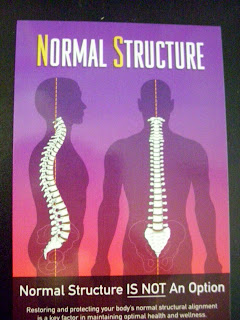
At Advanced Chiropractic, here in West Hartford we have a different approach to Neck Pain. The picture to the left is a representation of a spine outside normal range. We know this spine is abnormal because the photo below represents Normal Structure.

As you can see on the Normal Structure poster the dramatic differences from the Anterior Head Syndrome poster. These dramatic differences are the underlying cause of the majority of neck pain, back pain, degenerated (damaged) discs and degenerated joint disease, as well as radiating pain (traveling) to the arms and fingers.
We at Advanced Chiropractic, focus on Structural Correction of the spine which is vastly different from Conventional Chiropractic, Physical Therapist and Medicine - not better and very different.
You see, as a Structural Chiropractor our focus is to enhance your spine back to normal range. When the spine is in normal range this takes the harsh pressures off your discs, nerves and causes muscles to relax.
Stretching the muscles, general non-specific manipulation, massage, electric stim, ultrasound, and medications all try to reduce pain, increase motion and decrease spasm and I have no doubt that these accomplish these goals. They DO NOT correct the underlying structural abnormality.
Just like a crack in the wall, most would just "patch" the crack, only to have the crack return over and over again, because the frame of the wall was never corrected. Most common solutions, patch the crack. We address the abnormal frame/structure then we address the drywall. This is the different approach, we dig a little deeper.
We use specific spinal corrections using two instruments, structural rehabilitation with our remodeling tables and complementary recommendations to enhance what we do for you the other 23 hours of the day you are not at our office.
If this makes sense to you, then call our office at 860.523.5465 and schedule for your complimentary consult or our group presentation called, Chiropractic:101.
When
you schedule for either we will have a Gift Certificate waiting for
your for $50.00 off our Structural Examination and will also include our
Structural Correction with any Structural Rehab. This is a thank you
for reading our blog.
Have a GREAT Day!
About Dr. Chris...
Dr. Chris Chase is a Chiropractor that focuses on the Structural Correction of the spine at his practice Advanced Chiropractic, located in West Hartford,CT.
In contrast to traditional chiropractors whose goal is to provide
temporary relief of pain, Dr. Chase's goal is to shift the underlying
framework of the body back to the stability of what all healthcare
professionals agree is normal.
Dr. Chase can be reached at 860.523.5465
and www.advancedwesthartford.com or www.facebook.com/advancedwesthartford1
Folks of West Hartford, It's Easy To Understand, remember back in High School biology class, you probably saw a human skeleton in the corner (maybe even decorated for the holidays). As you looked closer at the skeleton, you saw many bones that look very organized. Even the spine (back bone) had curves, a large curve in the low back with a gradual curve in the mid back and finally a curve in the neck.
Think SLINKY (more than a wonderful toy).
The SLINKY is flexible, bendy and can stretch very far from end to end. The reason why the SLINKY can do all it's entertaining tricks is because of it's CURVES. The curves provide the flexibility. Your spine MUST have NORMAL STRUCTURE aka normal curves to be flexible.
Stiff as a board or Flexible as flower?
When you lose your normal structure of your spine, your spine becomes less flexible causing degeneration(damage) in your spinal discs and degeneration (damage)to your vertebrae (spinal bones).
This degeneration of your discs and bones leads to chronic low back pain, neck pain, upper back pain and headaches just to name a few.
At Advanced Chiropractic, we want you to know that we are not a conventional chiropractor, so let me explain the difference.
"Conventional Chiropractors" have three goals;
- Decrease Muscular spasm
- Increase range of motion
- reduce pain
This is what MOST conventional chiropractors offer in the way of care, and I believe that most of these folks do a great job at what they do.
Unlike conventional chiropractors, here at Advanced Chiropractic, we focus on Structural Correction by utilizing, specific spinal corrections, structural remodeling tables, and complementary recommendations in an effort to correct abnormal structural shifts of the spine.
When it comes to normal, we're not expecting anyone to be perfect. However, if your head is displaced more than 30mm (Objective Indicator) beyond what's considered acceptable, you have Anterior Head Syndrome a abnormal structural shift of the spine. Your head shifting forward is no different than your car being forced out of alignment, foundation of your house sinking on one side by just a couple of inches.
How do you think your car will ride, and what damage will be done to your house because of the foundation? This abnormal shift in your spine causes these Secondary Conditions, for example degenerated discs, low back pain, neck pain, sciatic and headaches.
Now, would you just put a nail in the squeaky floor or a new tire on the car or would dig a little deeper to correct the Mal-alignment of the car and correct the UN-balance in your foundation? What would you folks do first if it were your home or your car?
You would get someone to fix the foundation and correct the car alignment, because you KNOW if that is NOT done you will have these Secondary Conditions... back pain, degeneration of the discs, degeneration of the bones, etc.
If you have low back pain, then of course we will be looking to see if you have the normal curve in the low back, if your pelvis is level and if you have Anterior Head Syndrome. All these abnormalities put harsh pressures on the discs and cause pain.
Indicators
There are four signs that are clear indicators of a Structural Shift. These indicators are not related to age or genetics. They are a result of physical trauma, chemical toxins (processed foods, chemicals, etc.) and unadapted stress (we all have stress, this is normal, yet when not coped with this becomes a problem) that have disrupted the normal function of the spine. They include
- Anterior Head Syndrome
- Degenerated disc
- Degenerated bone
- Nerve Impingement Syndrome
Structural Examination
We take Structural Corrective Radiography's, most conventional chiropractors do not (because it is not necessary for their goals) - these films will determine the presence of degenerated bones and discs as well as show Anterior Head Syndrome and will show any abnormal structural shift in the curves.
Then we use a Structural Anaylsis Machine that will indentify abnormal loading of the spine (unbalanced) and then we use Digital Structural Photography, which will confirm any Anterior Head Syndrome and other structural shifts of the spine.
More than one way to cook an egg
We are not your only option, there are many and we only offer Structural Correction. During your consult we will go over in detail what all your options are and what exactly we do in our office to help you.
Our goal for you
Is to direct your spine to what's considered normal. By doing so, this will relieve pressure on the discs, which subsequently will relieve pressure on the nerves, thus improving or correcting your abnormal structural shift.
So, if you have low back pain, when we move your lumbar spine (low back) into a normal range this relieves the pressure to your discs and nerves which will then relieve your pain.
If this makes sense to you, then call our office at 860.523.5465 and schedule for your complimentary consult or our group presentation called, Chiropractic:101.
When you schedule for either we will have a Gift Certificate waiting for your for $50.00 off our Structural Examination and will also include our Structural Correction with any Structural Rehab. This is a thank you for reading our blog.
Have a GREAT Day!
About Dr. Chris...
Dr. Chris Chase is a Chiropractor that focuses on the Structural Correction of the spine at his practice Advanced Chiropractic, located in West Hartford,CT.
In contrast to traditional chiropractors whose goal is to provide
temporary relief of pain, Dr. Chase's goal is to shift the underlying
framework of the body back to the stability of what all healthcare
professionals agree is normal.
Dr. Chase can be reached at 860.523.5465
and www.advancedwesthartford.com or www.facebook.com/advancedwesthartford1
 We are not a conventional chiropractic or physical therapy office, they are nice folks and I have no doubt that they all do a good job with their patients. What we do is different than the conventional, we focus on a branch of chiropractic called Structural Correction.
The following is a patient question that I thought would be beneficial to this post, enjoy...
Patient Question: Other doctors never took x-rays of my spine, why do you?
Me: We focus on Structural Correction which is a branch of Chiropractic that is different than Conventional Chiropractic.
Just like there is a normal blood pressure or normal eye sight, there
is a normal range for your spine - not perfection, yet normal range none
the less.
We need to know exactly where your spine has
shifted abnormally and use Structural Corrective Radiographys (x-rays)
with our Structural analysis to determine severity and determine our
plan of action.
Most conventional chiropractors and physical
therapists, do not use x-rays to determine structural shifts, they are
focused on other goals - which is all well and good, we prefer to dig a
little deeper.
And...
Would you buy a house without
looking inside first? I like to know for sure what your spine looks like
before I come up with a plan to correct your spine, to me this just
makes sense.
The Normal Structure picture is what any knowledgeable health care provider, be it a neurosurgeon, structural chiropractor or orthopedists all can agree is normal structure.
Neck pain is a Secondary Condition that is usually a result of a Primary Condition of abnormal structure. The difference in our focus is to detect this abnormal structure and then correct the abnormal structure. When we correct the structure Secondary Conditions, such as Neck pain resolve.
Why?
Because, harsh pressures are exerted on your spine, discs, muscles, ligaments and nerves causing damage (degeneration) and pain. When we correct the structure these abnormal pressures are relieved allowing your body to continue healing in the appropriate ways. This is why we dig a little deeper, and to tell you no amount of massage, stretching, strengthening will ever correct an abnormal spine. Only a Structural Chiropractor, who focuses on structural correction can assist you.
Advanced Chiropractic is the only Structural Chiropractor in West Hartford and the Farmington Valley. We have two ways where you can gain additional information, the first is our Chiropractic:101 group presentation. This presentation is a non-formal chat about Traditional Chiropractic vs.Structural Chiropractic and other Myths and Facts you need to know to make an informed decision.
The other option is a private, Complimentary Consultation, which is a conversation and not a commitment. This is where you can tells us what you are experiencing and where we can show you exactly how we work with patients.
We go over...
- Time in the office,
- How long,
- What type of discomfort if any,
- Why we use specific corrections vs. aggressive spinal manipulations,
- Insurance, payment options, etc.
- We go over other common solutions and then answer any of your questions.
Side note:
When you come in for the Chiropractic:101 group presentation or private complimentary Structural Consult, we will present you with a gift certificate for $50 off our Structural Examination, our way of thanking you for taking your time to see our solution.
Have a GREAT Day!
About Dr. Chris...
Dr. Chris Chase is a Chiropractor that focuses on the Structural Correction of the spine at his practice Advanced Chiropractic, located in West Hartford,CT.
In contrast to traditional chiropractors whose goal is to provide
temporary relief of pain, Dr. Chase's goal is to shift the underlying
framework of the body back to the stability of what all healthcare
professionals agree is normal.
Dr. Chase can be reached at 860.523.5465
and www.advancedwesthartford.com or www.facebook.com/advancedwesthartford1
Screwed... Literally

I meet folks in West Hartford who are skeptical about conventional chiropractic care and I do not blame them.
We are NOT a conventional Chiropractic office, we focus on a branch of Chiropractic called Structural Correction. Here is the big difference between Conventional and Structural Chiropractic.
As
you know we DO not use aggressive manipulations, or ask you to "believe"
in chiropractic or claim to cure everything. And many like our
approach, they say it just makes sense and is reasonable.
The
picture above is that of an unfortunate patient (not at our office) that has under gone major back
surgery. Now, after seeing that picture, there is nothing in my office
that should scare, intimidate or even cause you to take pause.
What
I can say after my years of experience is this; "uncorrected spinal
structure will cause damage and degenerate spinal structures which for some will cause major
debilitating consequences".
We do Structural Chiropractic to correct abnormal structure from degenerating to such a point where this surgery was performed.
We
use two different instruments, a handheld Correcting instrument and
our Structural Corrective Table. Again, most conventional chiropractors
use their hands with a non-specifc general manipulations - which are
safe.
Our goal or focus is structural correction, with that in
mind we need to be specific and realize not every vertebra (back bone)
needs to be corrected. Our technique is similar to fine tuning of a grand piano vs using a sledge hammer to persuade a piece of concrete. Specific, gentle with a less is more mindset to patient care.
Detecting is vital, the correction is as
much a science and art. That is why we take Structural Films, most
conventional chiropractors DO NOT take films anymore. Again, the more specific we are the less force we need to use and results tend to speak for themselves.
Also
the hand held instrument delivers forces from mere (3-4) ounces to 40
pounds per square inch - very specific. Also the speed in which that
specific force is delivered resonates (beneficial) with the tissues of
the body, mainly your nervous system and ligaments.
And, I know
people are hesitant to go to a Conventional Chiropractor because of
unnecessary worry about aggressive manipulation - since you have
experienced Structural Chiropractic or now know about about our gentle
specific correction, when people ask about our office you can honestly
say we are gentle and specific - different than most conventional
chiropractors.
Who should be our patient?
Patients
who have periodic reoccurring symptoms, chronic patients, and those
who have been to other conventional chiropractors and/or physical
therapists, and have not experienced significant correction.
Many Secondary Conditions, such as; back pain, neck pain, sciatica, headaches and TMJ have been helped by correcting abnormal structure.
Plus, our technique gets results, in my not so humble opinion.
Have a GREAT Day!
About Dr. Chris...
Dr. Chris Chase is a Chiropractor that focuses on the Structural Correction of the spine at his practice Advanced Chiropractic, located in West Hartford,CT.
In contrast to traditional chiropractors whose goal is to provide
temporary relief of pain, Dr. Chase's goal is to shift the underlying
framework of the body back to the stability of what all healthcare
professionals agree is normal.
Dr. Chase can be reached at 860.523.5465
and www.advancedwesthartford.com or www.facebook.com/advancedwesthartford1
Most folks who have neck pain in West Hartford have had neck problems for months or years. It usually started off as muscle soreness or stiffness occasionally and as time progressed the symptoms usually become more frequent and pain becomes greater. From the once-in-a while pain to constant pain in the neck.
Some even experience pain in their arms traveling down to their fingers. Weakness, pins and needles, even in painful when sneezing or coughing. When you dread sneezing because of the pain, you have a serious problem that will get worse if not attended to properly.
Conventional solutions or common ways to deal with neck pain only address the symptoms or pain, which is all well and good and does not address normal spinal structure. For example;
- OTC or over -the - counter pills, kill pain temporarily and do not address correcting the structural problem.
- Anti-inflammatory and muscle relaxers, kill pain and relax muscles. Muscles are tight because they are trying to protect against further damage - it's your bodies way of stabilizing a problem area.
- PT and Conventional chiropractic - all good people and have three goals they are; decrease pain, increases how you move and decrease spasm - all well and good, and does not address abnormal structure.
- Nerve injections if the first three are of little help - then pain meds are shot into the damaged area. Does not address abnormal structure, only looking to temporarily decrease pain
- Surgery, from a disc ectomy (removal of the disc) to fusions with plates,screws and rods. Usually one surgery will lead to further surgeries down the road. This does address abnormal structure. Recovery time is usually a few weeks to many months.
The five conventional solutions are used all the time with vary amounts of success, you see if you feel better than that is counted as success, even though your structure was not corrected and the pain returns again, and again and again, so you do the above solutions over and over again.
Our focus at Advanced Chiropractic in West Hartford,is to correct your abnormal structure the first time and show you how to protect your corrected structure so you do not have to deal with neck pain over and over again. Our patients that work with us like that our approach is reasonable and just makes sense.
We look for Anterior Head Syndrome or AHS for short.

AHS has some tell tale indicators; muscle spasm/tension, Dowagers Hump, compressed or damaged disc, damaged or degenerated bone and nerve impingement syndrome. If you have just one indicator then you have AHS, if you have more than one indicator, this means your AHS is more severe.
As you may of heard, your head weighs 12 - 16 pounds so for every inch your head and shoulders are rounded this puts 10 more pounds of harsh force to your neck structure. In other words because you head has shifted anterior/forward abnormally this rots your spine from the inside out.
No amount of rubbing muscles, electric stim, ultrasound, popping joints, stretching or strengthening muscles will ever correct the abnormal structure. Other health care providers just do not know how and really do not want to - they are happy doing the conventional, it is what it is.
We ONLY correct abnormal structure, not saying there are other approaches out there, it's just we us the Structural Correction approach, which is new to most and different from the conventional.
We do not use aggressive spinal manipulation, we do not have you come in forever or do excessive care and we are not a jack of all trades - meaning we are great at structural correction, not great at pulled muscles.
How is our method is new and different?
Our focus is structural correction, using specific spinal corrections, which is utilized with two different correcting instruments. These instruments are precise and very tolerable to you the patient. Which help you move better, take the pain away and decrease muscle spasm and tension as well as positively activates your nervous system.
The we use Structural rehab to enhance your spinal structure more towards normal, getting to the underlining cause of the problem and along the way we have you do Complementary Recommendations to help with the other 23 hours of the day you are not in our office. This is vital without the Structural Rehab or Complementary Recommendation you will not get the best out of your care. We are a team, so you and I both have to work at this with our best effort and you will be excited with your corrections.
Who should be our patient?
Patients
who have periodic reoccurring symptoms, chronic patients, and those who
have been to other conventional chiropractors and/or physical
therapists, and have not experienced significant correction.
For additional information call: 860.523.5465
Advanced Chiropractic Facebook Page

Neck and Back pain are two common reasons patients seek out any doctor.
Commonly neck and back pain are treated by either using medications,
injections, Physical Therapy or Conventional Chiropractic and if need be
surgeries from minor to major spinal fusions.
There is more than one way to cook an egg.
We
use Structural Chiropractic care to detect and then correct a Primary
Structural Condition called Anterior Head Syndrome or AHS for short.
Because AHS is a Primary Condition it is responsible for many Secondary
Conditions - you may know as symptoms, such as Neck and Back Pain.
In
many cases, AHS (Anterior Head Syndrome) may be the underlying cause of
a large variety of Secondary Conditions. We focus on correcting AHS and
can create a plan of care to improve your structure and your health.
AHS
causes abnormal pressures on your discs, vertebrae (spine bones),
muscles, ligaments and nerves, once we correct AHS this relieves the
harsh forces on these inner frame work structures improving your spine
and health.
The objective indicators that confirm AHS are the following:
Muscle Tension/Spasm
Dwager's Hump ("Granny Hump")
Compressed (Degenerated) Disc
Nerve Impingement Syndrome
Damaged (Degenerated) Vertebra
There are many ways to deal with secondary conditions our way is to address AHS. We correct AHS with the following:
You
see when your head has shifted more than an inch anterior this creates
an additional 10 pounds of force, which generates harsh pressures in
your spine leading to degeneration, pain and discomfort. What we focus
on is correcting you structure back into the normal range this
alleviates the harsh pressures allowing your spine to improve and you to
regain health. This is how we accomplish our goal of Structural
Correction.
AHS can cause these Secondary Conditions:
Neck & Back Pain
Sciatica
Numbness & Tingling
Muscular Spasm
Headaches
Pinched Nerves
Herniated Discs
Degenerated Disc disease
Degenerated joint disease
Poor Posture
Dizziness/vertigo
Carpal Tunnel Syndrome
We use:
Specific Spinal Corrections using two specific instruments.
We use Spinal Remodeling Tables for our Structural Rehabilitation.
Finally, we
design a Plan of Care that also includes Complementary Recommendations,
that enhance your care in our office and then help you Protect your
correction.
What we don't do is just as important as what we do, you need to know so you can make an informed decision.
We do not use aggressive spinal manipulations
We do not have you "come forever"
We do not ask you to "believe" in chiropractic
And we do not claim to cure everything
We focus on correcting abnormal Primary Structural Conditions of your spine called AHS (Anterior Head Syndrome).
Have a GREAT Day!
About Dr. Chris...
Dr. Chris Chase is a Chiropractor that focuses on the Structural Correction of the spine at his practice Advanced Chiropractic, located in West Hartford,CT.
In contrast to traditional chiropractors whose goal is to provide
temporary relief of pain, Dr. Chase's goal is to shift the underlying
framework of the body back to the stability of what all healthcare
professionals agree is normal.
Dr. Chase can be reached at 860.523.5465
and www.advancedwesthartford.com or www.facebook.com/advancedwesthartford1


